

Road Safety Sign Installation: A Practical Guide
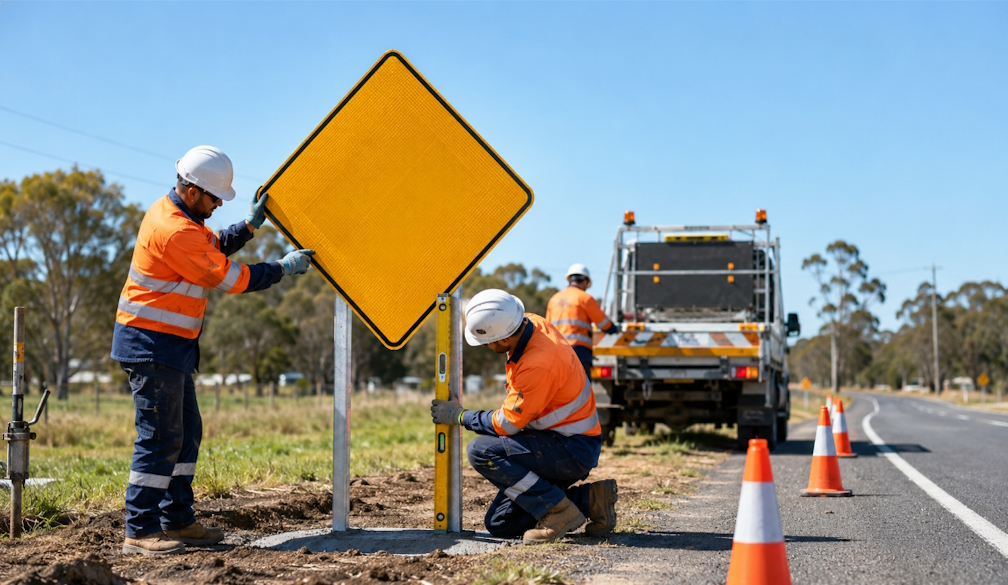
Roads and worksites rely on signs to communicate fast, clear information. When signs are installed without a plan, drivers may miss key warnings or misunderstand priority, speed changes, or temporary hazards. Effective road safety sign installation is a combination of correct sign selection, compliant placement, reliable mounting, and post-install verification. If you’re reviewing common sign categories used on Australian roads and sites, Road Safety Signage provides a useful reference point for what’s typically specified.
Approvals and responsibility should be clarified early
A frequent issue is assuming one party “owns” signage decisions. For permanent installations, clarify who approves the sign type and location (local government, road authority, asset owner). For temporary traffic management, confirm the traffic guidance scheme or plan, including:
- Sign types and sizes
- Placement order and spacing
- Any speed reductions or detours
- Responsibilities for set-up, checks, and removal
A clear approval path avoids rework and reduces the risk of non-compliant signage being left in place.
Pick sign size and message based on speed and complexity
The faster the approach speed, the more time a driver needs to read and react. Sign size, text length, and symbol clarity all affect comprehension. Overloading drivers with too much information can be as unhelpful as no information.
Practical selection principles:
- Prefer standard symbols and short messages
- Use larger sizes where speeds are higher or sight lines are limited
- Avoid mixing multiple instructions on a single panel unless required
- Consider whether an advance warning sign is needed before the primary message
If a driver must make a decision (merge, stop, detour), the sign needs to appear early enough to support safe manoeuvres.
Positioning should account for real-world obstructions
Setbacks and lateral placement are often constrained by kerbs, shared paths, trees, power poles, and driveways. A sign might be “installed” but effectively hidden.
When selecting the exact spot:
- Check the view from the driver’s lane, not from the shoulder
- Ensure the sign face is not masked by parked vehicles or bins
- Avoid placing directly behind other signs, bus stops, or advertising
- Consider cyclists and pedestrians so supports don’t create hazards
- Leave clearance for maintenance and vegetation management
It also helps to consider seasonal changes. What’s visible in winter may be hidden in summer growth.
Mounting height and alignment influence readability
Mounting height affects who can see the sign and how quickly it’s read. Alignment affects retroreflectivity and contrast under headlights. Common errors include installing too low (blocked by vehicles) or tilting the sign away from approaching traffic.
Good practice includes:
- Setting consistent heights across a corridor where practical
- Aligning the sign face square to oncoming traffic
- Ensuring panels are level and not skewed
- Using brackets that prevent gradual slippage or rotation
Consistency matters. If drivers encounter variable heights and inconsistent placement, trust and recognition drop.
Materials and durability should match the exposure
Roadside environments are hard on hardware. Wind, vibration, sun exposure, salt air, and occasional impacts can all shorten the life of an installation.
Match materials to the site:
- Use corrosion-resistant fixings where exposure is high
- Select post types and wall thicknesses appropriate to wind loading
- Use compliant reflective sheeting suited to the road class and lighting
- Consider anti-graffiti measures where vandalism is common
Spending a little more on the support and fixing system often prevents repeated call-outs later.
Installation safety needs its own plan
Installing signs can expose crews to live traffic, moving plant, uneven ground, and overhead services. Risk controls should include:
- Traffic control appropriate to the road type and speed
- Exclusion zones for drilling, digging, and lifting
- Checks for underground services before excavation
- Safe manual handling for large panels and posts
- Procedures for working near pedestrians and cyclists
A safe install is not only about compliance. It keeps the project moving without incidents or costly stoppages.
Post-install checks prevent silent failures
Once installed, verify performance rather than assuming it’s correct. A structured check might include:
- Daytime sight-line check from typical approach distances
- Night check for reflectivity, glare, and legibility
- Confirmation that the sign is stable and does not wobble
- Verification that the message sequence makes sense in motion
- Photo documentation for asset records and future audits
These checks catch issues like slight misalignment, partial obstruction, or confusing sign order before they become complaints or hazards.
Ongoing management keeps signage credible
Drivers respond best when signage is accurate and consistent. Signs that remain after works are completed or speed restrictions that don’t match conditions can reduce compliance over time.
A simple management routine includes:
- Removing temporary signs promptly when no longer needed
- Scheduling inspections after storms or major site changes
- Replacing damaged panels and tightening fixings
- Tracking reflectivity decline as part of asset maintenance
Well-planned installation combined with routine upkeep ensures road safety signs remain clear, trusted, and effective in the moments that matter most.
