

How Heavy-Duty Pallets Support Safer and Smarter Material Handling
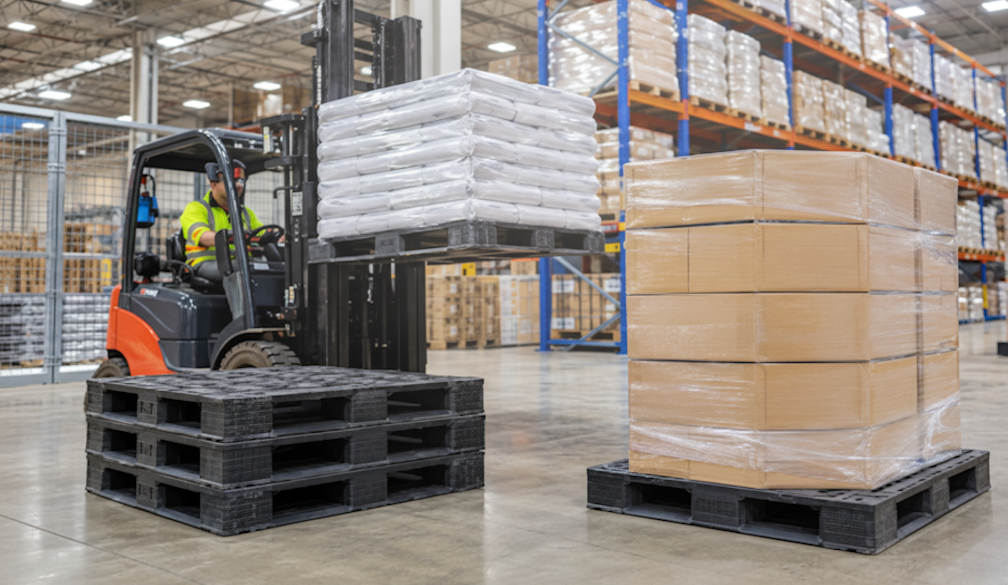
In busy warehouses, distribution centres and manufacturing environments, pallets do far more than move stock from one point to another. They influence safety, hygiene, storage efficiency and the overall flow of goods. For businesses handling large volumes or substantial loads, choosing the right pallet type can make a measurable difference to day-to-day operations. Many facilities now look at heavy duty plastic pallets as a practical option for improving durability and consistency in demanding settings.
Why Pallet Choice Matters in Industrial Environments
Pallets are often treated as a standard warehouse item, but not all pallets perform the same way under pressure. In industries such as food processing, logistics, retail distribution and manufacturing, pallets are exposed to repeated lifting, stacking, transport movement and varying environmental conditions.
A pallet that cracks, absorbs moisture or loses its shape over time can create avoidable risks. Damaged units can affect load stability, slow down handling processes and increase replacement costs. For operations that rely on repeatable performance, pallet selection becomes part of a broader efficiency and safety strategy.
The Benefits of Plastic Over Traditional Materials
Traditional timber pallets remain common, but plastic options are increasingly used where consistency and hygiene are important. Plastic pallets do not splinter, and they are easier to clean than porous materials. This can be particularly useful in sectors with strict handling and cleanliness requirements.
Another advantage is uniformity. Plastic pallets are manufactured to consistent dimensions, which helps support smoother automation, more reliable stacking and better fit within racking systems. This level of consistency is valuable in modern supply chains where standardisation reduces friction across transport and storage processes.
When Heavy-Duty Performance Becomes Essential
Not every business needs a pallet designed for substantial loads, but many do. Heavy-duty applications often involve dense products, high stacking requirements or repeated use across large-scale operations. In these environments, pallets must withstand pressure without warping or breaking down prematurely.
This is especially relevant in Australian industries where warehouse throughput can be high and transport routes may involve long distances. A stronger pallet can reduce product damage, improve handling confidence and support more predictable operations. Over time, that can translate into fewer interruptions and better asset utilisation.
Hygiene, Weather Resistance and Longevity
One of the reasons plastic pallets are widely considered in industrial settings is their resilience. Unlike timber, plastic does not absorb water, which makes it suitable for cold storage, wash-down environments and outdoor use. It is also less likely to harbour contaminants when cleaned correctly.
For businesses operating in variable Australian conditions, resistance to moisture and temperature changes can be a major factor. A pallet that maintains its structure through repeated use is often more cost-effective over its lifespan, even if the upfront investment is higher than lower-grade alternatives.
A Better Fit for Modern Warehousing
Warehousing has changed significantly in recent years. Businesses are expected to move goods faster, maintain stronger compliance standards and use storage space more efficiently. Equipment and materials that support these goals are becoming more important in procurement decisions.
Pallets play a quiet but essential role in that shift. Stronger, more uniform pallet systems can help reduce handling issues, support automation and simplify inventory movement. For operators reviewing their internal processes, pallet design is no longer just a purchasing detail. It is part of operational planning.
What to Consider Before Making a Change
Before selecting a pallet type, businesses should assess how pallets are actually used across their supply chain. Load weight, rack compatibility, hygiene requirements, transport frequency and exposure to outdoor conditions all matter. A pallet that performs well in one setting may not suit another.
The most effective choice is usually the one that aligns with real operating demands rather than the lowest initial cost. In high-use environments, reliability often delivers greater value over time than frequent replacement. As material handling demands continue to grow, durable pallet solutions will remain an important consideration for Australian businesses focused on safety, consistency and long-term efficiency.
