

Why Some Children Do Their Hardest Therapy Work While They Think They're Just Playing
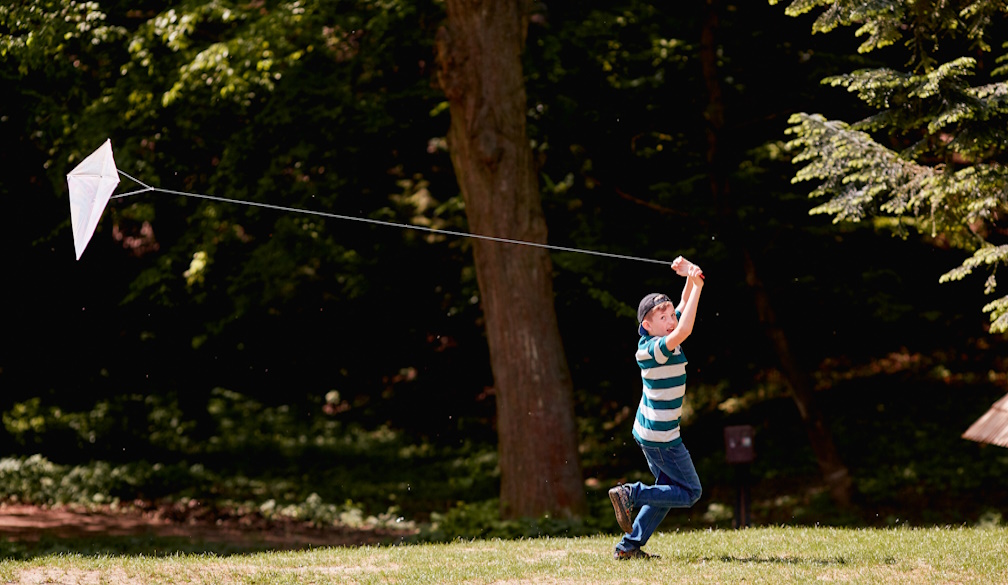
A child working out how to rig a rope swing over a creek bank is solving a harder motor planning problem than most tabletop activities ask of them, and they rarely notice they're working at all. That gap, between how much a task demands and how much effort it feels like, is a big part of why occupational therapy delivered outdoors can look and function very differently from the version most parents picture when they hear the term.
What a Clinic Table Can and Can't Replicate
Pegboards, worksheets and fine motor kits exist because they're useful: they isolate a specific skill and let a therapist grade the difficulty precisely. Their limitation is that they're fixed and externally motivated. A child completes the task because they've been asked to, the materials behave the same way every time, and the goal is set by someone else. For some children that structure is exactly what's needed. For others, particularly those who find a therapy room stressful or unmotivating, that same structure can become the obstacle rather than the tool.
Why Unstructured, Natural Materials Ask More of a Child
Loose, natural materials don't behave consistently. A stick balances differently depending on where it's picked up. Mud has a different texture after rain than after a dry week. Uneven ground demands constant small adjustments in balance that a flat clinic floor never asks for. Because none of it is fixed, a child working with natural materials has to plan, adjust and problem-solve continuously rather than executing a single practised motion, and they're doing it because building a cubby or catching a yabby is something they actually want to do, not because they've been asked to complete a set of repetitions.
A few examples of how this plays out in practice:
Building a den or shelter from branches and rope asks a child to sequence several steps, judge weight and balance, and adjust a plan when a branch doesn't hold, which draws on motor planning and problem-solving together rather than in isolation. Sorting and categorising things found along the way, leaves, shells, insects, works on sustained attention and classification skills in a context the child has chosen rather than one imposed on them. Walking, balancing and climbing over logs, rocks and uneven creek banks builds proprioception and core stability through constantly varying terrain, which a flat indoor surface can't replicate no matter how the exercise is designed.
How This Looks in an Actual Session
During nature based occupational therapy, sessions are generally built around this kind of open-ended natural activity rather than a fixed set of exercises, with the therapist observing and adjusting the environment or task to work on particular goals as they arise within the child's own play. The skill-building happens inside something the child is already invested in, which is part of why engagement can look different to a structured session, even when similar underlying goals are being worked on.
Where Traditional, Clinic-Based Therapy Still Fits
None of this makes outdoor, nature-based sessions a replacement for clinic-based therapy in every case. Some children, particularly those with specific sensory sensitivities that make unfamiliar outdoor environments overwhelming at first, may need a more controlled setting initially, or a blend of both approaches over time. Precise, repeatable fine motor goals, like the specific pencil grip needed for handwriting, are sometimes more efficiently practised with the right tabletop tools than reconstructed from natural materials. The two approaches generally work best as complements rather than a choice between one or the other, depending on what a particular child responds to and what the current goals are.
What Parents Are Usually Best Placed to Notice
The detail worth watching for at home isn't which approach sounds more appealing on paper, but how a child actually engages: whether they arrive resistant to a task and need to be coaxed through it, or whether they're absorbed enough that the underlying skill-building goes almost unnoticed. That difference in engagement is often a more useful piece of information for a therapist to hear about than a general update on how a session went.