

When Is a Weed Wiper Better Than Boom Spraying?
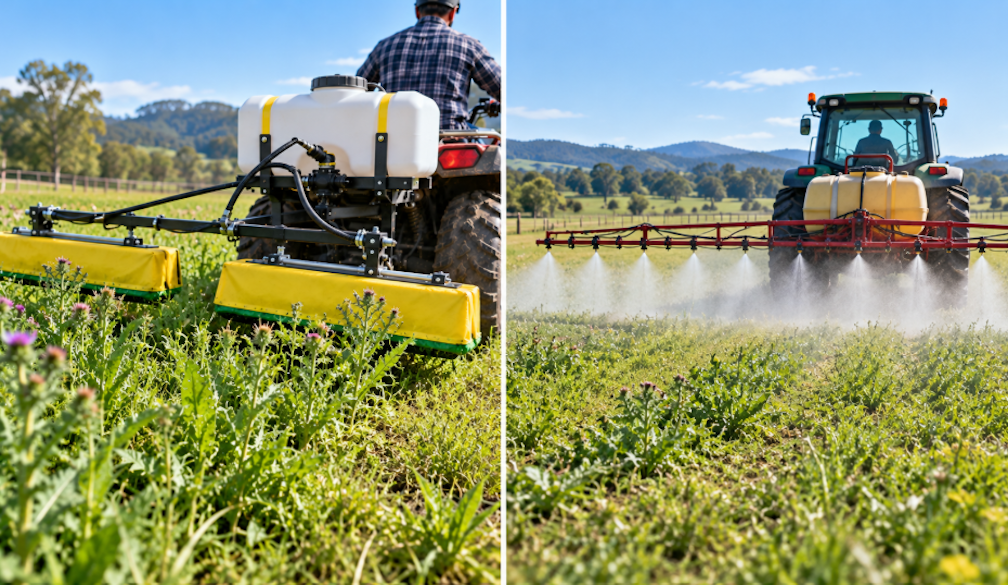
A boom sprayer is useful when you need to cover a large area quickly and treat the whole paddock. However, it can be difficult to use when weeds are growing through an established pasture, particularly when there is no selective herbicide that will control the weeds without damaging the pasture.
A weed wiper applies herbicide to weeds through direct contact. This allows you to target taller weeds while avoiding contact with the pasture underneath.
How a Weed Wiper Works
Two rows of absorbent wicks run across the machine, with a 12V pump feeding them from a 50L tank. You mix the herbicide and water in the tank, pump the mixture through until the wicks are wet, then set the wiper as low as possible so the wicks contact the weeds without damaging the pasture. As you drive, the wicks brush across the tops of weeds that are tall enough to contact them. A bruise bar sits ahead of the wicks and damages the weeds, helping the herbicide penetrate the plant.
The Weedwiper uses the difference in plant height to target weeds growing above the pasture. So you can apply a suitable herbicide to taller weeds while avoiding contact with the pasture underneath. The wicks apply the herbicide by contact rather than spraying, so they do not create spray droplets or spray drift.
What Decides Whether Wiping Will Suit Your Paddock
The weeds need to be taller than the pasture for the wicks to reach them without touching the grass underneath. If the weeds are growing at the same height as the pasture, the wicks will contact both the weeds and the grass.
Giant Rat's Tail Grass and African Love Grass are good examples of weeds that can be controlled with a Weedwiper when they are growing above the pasture. Keeping the pasture grazed down allows you to set the wiper lower and get better contact with the weeds.
Weeds Commonly Controlled by Wiping
The Weedwiper can be used to control a range of weeds that grow above the pasture, including:
- Fireweed
- Serrated tussock and Poa tussock
- Blady grass
- Giant Rats Tail Grass and Parramatta grass
- African Love Grass
- Setaria
- Thistles
- Rushes and bracken
- Silverleaf nightshade
- Young gum and wattle regrowth
These weeds can grow above the surrounding pasture, giving the wicks enough height difference to contact the target plants without contacting the pasture underneath. Keeping the pasture grazed down can help maintain this height difference and improve contact between the wicks and weeds.
Preparing the Paddock
Grazing the pasture down helps create the height difference needed for wiping. It allows you to set the wicks lower so they can contact the weeds without touching the pasture. Slashing can also lower the pasture, but it cuts the weeds at the same time. You may need to wait for the weeds to grow above the pasture again before wiping.
The weeds need to be actively growing when you wipe them and have enough leaf area to absorb the herbicide. If the weeds are under drought stress or have stopped growing, they may not take up enough herbicide for effective control.
Setting Up and Operating the Machine
Trailed weed wipers are available in working widths from around 2.4m to 6.2m. Larger models have folding wings that make it easier to move through gateways and along narrow tracks. They can be towed behind a ute, quad, UTV or tractor, while some models can be mounted on three-point linkage. Smaller 1.9m units are suited to ride-ons and quads, and narrow models with break-away wings can be used between rows in vineyards and orchards.
The way you set up the machine can affect the result:
- Travel speed: A Weedwiper can cover about 4.5 hectares per hour at 10km/h. Travelling too quickly gives the wicks less time to contact the weeds, which can reduce herbicide transfer and affect the result.
- Wick wetness: Keep the wicks wet to transfer the herbicide to the weeds without letting them drip onto the pasture.
- Wick height: Set the wicks low enough to contact the weeds but high enough to avoid the pasture. The wheels help keep the wicks at the right height when working over uneven ground.
- Chemical rate: Check the herbicide label before mixing and ensure the product is suitable for wiper application.
- Machine setup: Keep the machine level so the wicks maintain even contact with the weeds across the working width.
A correctly set-up Weedwiper can achieve weed kill rates of around 80–95%. Good weed contact, the right herbicide rate and suitable growing conditions all help achieve better control.
When to Use the Boom Instead
A boom sprayer may be a better option in the following situations:
- Rosette and low-growing weeds: Capeweed, flatweed and young thistles may be too low for the wicks to contact without also touching the pasture.
- Weeds growing at the same height as the pasture: The wicks will contact both the weeds and the pasture, making it difficult to target the weeds without damaging the grass.
- Weeds that can be controlled with a suitable selective herbicide: Boom spraying can treat these weeds without relying on a height difference between the weeds and pasture.
- Full paddock treatment: A boom sprayer provides broad coverage when you need to treat the whole paddock rather than individual taller weeds.
Weed Wiper and Boom Sprayer Compared
|
|
Weed Wiper |
Boom Sprayer |
|
Selectivity comes from |
Plant height |
Herbicide chemistry |
|
Effect of wind |
No spray drift |
Restricts working days |
|
Best suited to |
Weeds standing above the pasture |
Weeds at or below pasture height |
|
Chemical use |
Concentrated, only where it contacts |
Diluted, across the whole area |
|
Ruled out by |
No height difference |
No selective product available |
Deciding Which to Use on Your Paddock
Neither machine replaces the other, and most properties keep both working across the season. You make the decision in the paddock rather than the shed, so walk the area you plan to treat and check two things: whether the weeds stand clear of the sward, and whether a selective herbicide exists for them.
If the weeds stand above the pasture and no selective product touches them, wipe them. The grass keeps growing underneath and competes with whatever comes back. If they sit low, grow level with the pasture, or fall to a selective chemical, the boom finishes the job faster.
Choose the method based on the weeds you need to control and the pasture you want to protect.
