

How to Choose the Right Steel Plate for Your Project
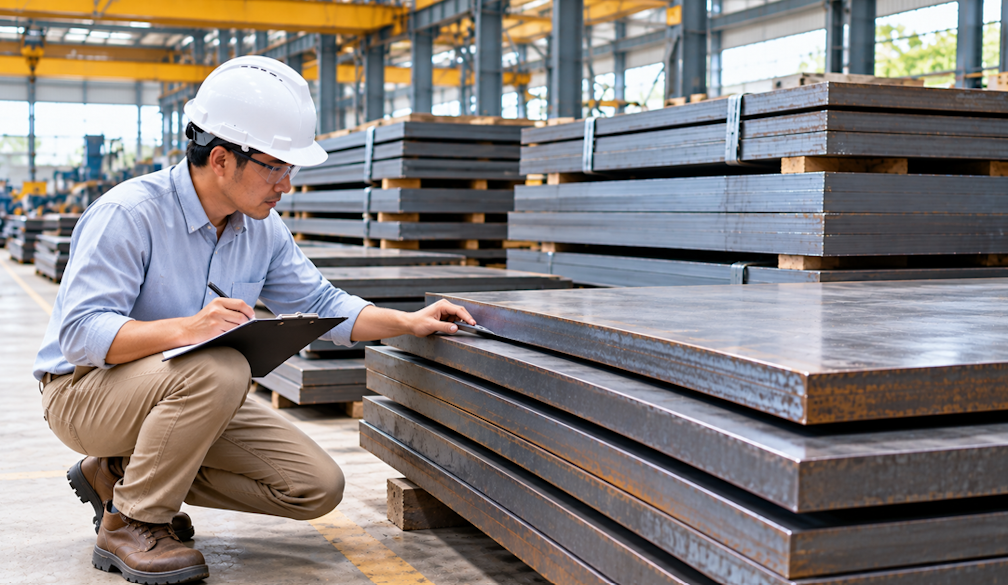
Start with the project specification
Selecting the right material begins with understanding what the project actually demands from the steel. A suitable steel plate needs to match the required thickness, grade, fabrication method and end use rather than being chosen on size alone. Australian Steel supplies a range of plate grades and thicknesses, giving fabricators and project teams options for structural, engineering, wear and specialised applications.
Thickness is one of the first specifications to confirm because it affects weight, fabrication requirements and the finished component. Australian Steel lists plate stock across a broad thickness range, while its available grades include G250, G350, Q&T grades, K1045 and boiler plate. When selecting steel plate, it is useful to consider the loads, cutting method and downstream processes before placing an order.
The grade also matters because different grades are suited to different engineering requirements. G250 and G350 are used for general structural and fabrication work, while Q&T grades provide higher hardness and strength for applications where wear resistance is important. K1045 is a heat-treatable option for general engineering applications, and boiler grades are intended for pressure-related uses. This makes steel plate selection a specification exercise rather than a simple product purchase.
Match grade and thickness to the application
Fabrication requirements should be considered at the same time as material selection. Australian Steel provides profile cutting, oxy cutting and high-definition plasma cutting, along with drilling, wash grinding, stress relieving, folding, rolling, machining, welding and fabrication. Choosing steel plate from a supplier that can also support processing can simplify the movement from raw stock to a component ready for further assembly or installation.
Project requirements can also change the most suitable material choice. A component exposed to impact, abrasion, pressure, structural loading or repeated fabrication may need a different grade from a component used for a straightforward general fabrication task. The important point is to start with the engineering requirement and then work backwards to the material specification. This avoids choosing a familiar grade simply because it is commonly used.
Processing can influence the final result as well. Cutting, drilling, forming, welding and heat treatment each place different demands on plate material and on the production sequence. Where several operations are required, it is useful to identify them before the order is finalised. That gives the supplier a clearer understanding of what needs to be supplied and what work needs to be completed before the material reaches the next stage of manufacture.
Plan cutting and finishing together
Good procurement information is therefore as important as the material itself. Drawings, grade requirements, thickness, dimensions, quantities and delivery expectations provide a practical brief for the supplier. For larger or repeat orders, discussing these details early can also help coordinate stock availability and processing capacity. The result is a more predictable path from plate selection to the finished fabricated component.
Another consideration is whether the supplier can support the required quantity and delivery timeframe. Australian Steel operates from a purpose-built facility in Braeside and states that it carries substantial plate stock, with services supporting customers across Victoria and other Australian states. For projects involving multiple parts or recurring requirements, discussing material availability and processing requirements early can help avoid unnecessary delays.
Ultimately, the best steel plate is the one that fits the engineering specification and the fabrication pathway. Before ordering, confirm the grade, thickness, dimensions, quantity, cutting requirements and any post-cutting processes that will be needed. Australian Steel combines plate supply with processing services, making it possible to discuss both material and fabrication requirements through the same supplier.
Plan cutting and finishing together
Whether the requirement is for a structural component, wear application, engineering part or specialised fabrication, careful material selection provides a stronger foundation for the finished product. A clear specification helps the supplier identify appropriate stock and processing options, while early planning can make cutting, finishing and delivery more straightforward.
Before finalising an order, it is also useful to distinguish between the material specification and the finished component specification. The grade describes the material characteristics, while the drawing and fabrication plan describe what the finished part must become. Keeping those requirements together helps the supplier understand whether the job involves simple stock supply, profile cutting or a combination of processing steps. It also gives the project team a clearer basis for checking the finished component before it moves into assembly, installation or another manufacturing stage.
Clear specifications also make it easier to review an order before production begins. Checking the material grade, thickness, dimensions and quantity against the project documentation can identify discrepancies early. This simple review is particularly useful when several plate products are being purchased for one project.
