

What “Full-Service Bathroom Renovation” Actually Includes (and What It Doesn’t)
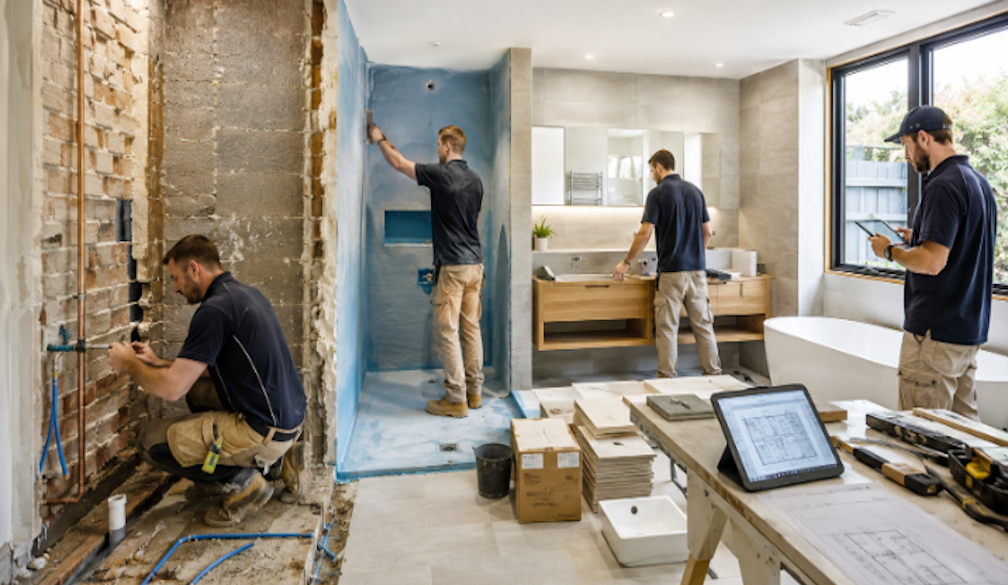
“Full-service bathroom renovation” sounds straightforward: one team, one scope, and a finished bathroom without the homeowner chasing trades. In practice, the phrase is used loosely. Some providers manage everything from design to handover, while others coordinate only part of the job and leave key decisions or trades to you. That mismatch is one of the most common reasons quotes can look similar on paper but produce very different outcomes.
If you’re researching best bathroom renovations melbourne, it helps to understand what full-service typically covers, which items are commonly excluded, and the questions that clarify responsibilities before work begins. The goal is not to find the fanciest inclusions list. It’s to avoid gaps that lead to delays, variations, or quality issues once the bathroom is already demolished.
What full-service usually includes
A true full-service renovation generally covers the end-to-end delivery of the bathroom, including planning, trade coordination, compliance and finishing details. While every project differs, the “full-service” label usually implies a provider takes responsibility for sequencing works and handing over a completed, functional space.
Most full-service scopes include:
- Project management and scheduling: Coordinating trades in the correct order, managing site access, and keeping timelines moving. Bathrooms are sequence-dependent, so strong scheduling is a genuine value-add.
- Demolition and site preparation: Removal of existing fixtures and finishes, waste disposal, and preparing the room for new works. In older Melbourne homes, this stage may also reveal hidden issues that need to be addressed early.
- Trade coordination: A full-service provider typically arranges licensed plumbing and electrical work, tiling, waterproofing, carpentry, and installation of fixtures.
- Rough-in and fit-off: “Rough-in” is the behind-the-wall plumbing and electrical set-up; “fit-off” is the installation of final fixtures (taps, toilet, vanity, lighting, exhaust, accessories).
- Waterproofing and tiling: Most full-service renovations include wet area waterproofing and tiling, which are foundational to durability. This stage should also include appropriate surface preparation and curing time.
- Quality checks and handover: Walkthrough and rectification of issues, plus basic documentation relevant to the works performed.
What’s important here is responsibility. In a well-run full-service renovation, you should not be chasing down separate contractors, negotiating trade availability, or figuring out which step happens next.
What “full-service” often does not include
This is where misunderstandings happen. Many homeowners assume “full-service” means every product, every decision, and every repair is covered. In reality, most providers define boundaries around selections, supply items, and unforeseen repairs. Those boundaries are not necessarily a red flag, but they must be visible in the quote.
Common exclusions or limitations include:
- Fixtures and fittings beyond allowances: Quotes may include a set allowance for tapware, toilets, vanities, and tiles. If you choose items above that allowance, you pay the difference as a variation.
- Structural remediation and hidden damage: Rotten framing, termite damage, subfloor replacement, asbestos management, or unexpected plumbing reroutes may sit outside a standard scope. These are often impossible to price accurately until demolition reveals what’s behind the walls.
- Major layout changes: Moving plumbing locations (especially toilets and showers) can be included, but it may be treated as a separate scope due to the extra labour and materials involved.
- Painting beyond the bathroom: Some projects include painting within the bathroom only, while adjacent areas impacted by work (for example, hallway scuffs or ceiling transitions) may be excluded.
- Upgrades outside the room: Switchboard upgrades, whole-home plumbing upgrades, or ventilation ducting changes that extend beyond the bathroom may not be included unless specified.
- Decorative items and soft furnishings: Items like freestanding storage, plants, towels, and styling are typically not part of renovation delivery.
The key is to treat “full-service” as a management and delivery model, not a guarantee that every possible item is included at no extra cost.
How to compare full-service quotes properly
Two “full-service” quotes can differ by thousands because they assume different levels of responsibility and different product tiers. The most reliable way to compare is to standardise how you read them.
Look for:
- A clear inclusions schedule: Does the quote list exactly what is included by category (demolition, waterproofing, tiling, plumbing, electrical, cabinetry, screens, accessories)?
- Defined product allowances: Are tiles, tapware, vanity, toilet and bath identified with realistic allowances? Vague allowances can lead to cost surprises later.
- Waterproofing details: Waterproofing is not a single line item. Check whether surface prep, membrane system, and detailing around penetrations are specified.
- Waste removal and site protection: Is rubbish removal included? Are floor protections mentioned for access paths through the home?
- Sequencing and duration assumptions: Does the provider explain the expected timeline and the dependencies that can affect it, such as lead times on screens or vanities?
- Variation process: A professional quote outlines how variations are handled and approved. This is where many disputes begin if not clarified.
A practical step is to ask each provider to confirm what you, as the homeowner, are responsible for. If the answer is unclear, it’s a sign the definition of “full-service” is not truly settled.
The questions that prevent surprises during the build
Before you sign anything, ask questions that expose gaps in scope. These are not “gotcha” questions. They are the difference between a predictable renovation and one that drifts.
Helpful questions include:
- Who supplies the fixtures and fittings, and which items are owner-supplied versus included?
- What happens if demolition reveals water damage, mould, or subfloor issues?
- Are waterproofing and tiling completed by the same team, and what checks occur before tiling begins?
- Does the scope include ventilation upgrades and exhaust fan ducting to the outside?
- Are shower screens and mirrors included, and what are the lead times?
- What is included in electrical (number of lights, power points, heated towel rail wiring, fan, switches)?
- What does handover look like and what rectification window is offered?
A full-service renovation should feel simpler, not more confusing. When inclusions and exclusions are clearly defined, homeowners can make decisions earlier, avoid rushed compromises mid-build, and compare providers on a like-for-like basis. The result is a bathroom that is not only attractive on day one, but also properly built, compliant, and easier to maintain for years afterwards.
 "Pin It")