

Pros and Cons of uPVC Windows: Are They Right for Your Home?
Key Takeaways
∙ uPVC frames have lower thermal conductivity than aluminium, delivering better energy performance without the cost premium of thermally broken aluminium.
∙ Low maintenance: no painting, no rot, no corrosion, a wipe-down with soapy water is all that's needed.
∙ Acoustic advantage: the material's density and multi-chamber profile outperform standard aluminium for noise attenuation.
∙ Structural limitation: uPVC requires thicker profiles for large openings, aluminium is the better choice for architectural-scale glazing and slim sightlines.
∙ Colour range is narrower than aluminium's powder-coat palette, a practical consideration for heritage homes and custom-colour projects.
∙ Australian UV conditions require specifically formulated uPVC with documented UV stability; European-spec budget imports may not cope with our climate.
∙ Best suited to: standard suburban residential projects, investment properties, noise-sensitive locations, and mid-range renovations where thermally broken aluminium is cost-prohibitive.
uPVC windows dominate the residential market in Europe and are growing fast in Australia, but they're still less common here than aluminium. Many homeowners comparing frame materials know aluminium well but are less sure about uPVC: what it is, how it handles Australian conditions and whether its European popularity carries over.
This guide weighs up the uPVC windows pros and cons against other window materials, where uPVC outperforms and where it falls short, so you can decide whether it's the right choice for your new windows.
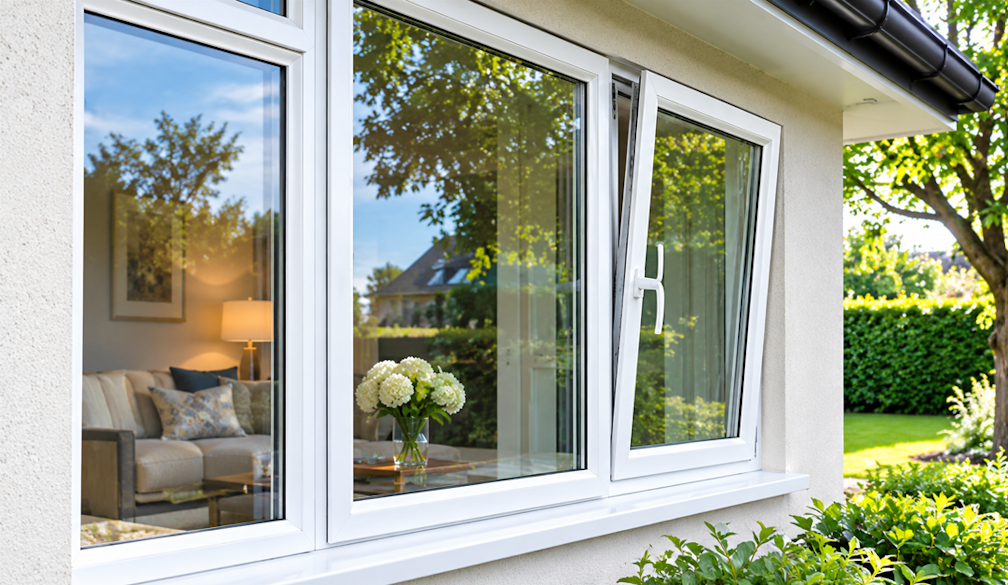
uPVC frames are available across a range of window configurations, including double glazed casement windows and double glazed tilt and turn windows , both of which pair particularly well with uPVC's thermal and acoustic strengths. Understanding the frame material first makes it easier to evaluate those specific configurations with confidence.
uPVC Frame Material Overview
uPVC stands for unplasticised polyvinyl chloride. The "unplasticised" part matters: regular PVC is softened with plasticisers to make it flexible (think garden hoses and vinyl flooring). uPVC has no plasticisers added, which makes it rigid, dimensionally stable, and capable of forming window and door frames without internal metal reinforcement in most standard residential applications, though steel reinforcement is used in larger or more structurally demanding uPVC window designs.
The material has been used for windows and doors in Europe since the 1950s and is the dominant residential window material in Germany, the UK, and across much of continental Europe. That long track record gives this low maintenance material a significant body of real-world performance data, and it's mostly positive, with appropriate caveats for climate and application.
In Australia, uPVC windows are available from specialist suppliers but aren't stocked by every window retailer. That narrower supplier base is worth factoring into your planning.
The Genuine Advantages
uPVC has several performance characteristics that make it genuinely compelling for Australian residential projects. The following covers the areas where the material delivers real-world advantages.
Thermal Performance
uPVC is naturally insulating, with notably lower thermal conductivity than aluminium. Metal frames conduct heat readily, which is why standard (non-thermally broken) aluminium frames act as thermal bridges, letting heat in during summer and allowing heat loss as warm air escapes in winter. uPVC doesn't have this problem; the frame itself forms part of the insulating barrier.
uPVC frames provide excellent thermal insulation, comparable to timber and thermally broken aluminium. The hollow multi-chamber profile design used in most uPVC window frames further reduces heat transfer through the frame, lifting insulation performance and overall thermal efficiency.
The practical result is that uPVC double glazed windows can deliver strong whole-of-window thermal performance, and far better insulation than single glazing, without requiring the thermally broken frame technology that pushes aluminium window costs. That means lower energy bills, lower cooling costs in summer and real energy savings over time. For homeowners prioritising energy efficiency on a budget, it's a cost effective way to cut energy costs.
It does come with a qualification for Australian conditions: uPVC expands and contracts more with temperature changes than aluminium does. In climates with extreme temperatures, think western-facing windows in inland Queensland or South Australian summers, this thermal movement needs to be accounted for in installation. Properly designed uPVC window systems accommodate this with appropriate tolerances. Still, it's a reason to choose high quality uPVC windows from manufacturers who understand your climate zone rather than importing budget European products designed for cooler conditions.
Low Maintenance Requirements
Aluminium requires minimal maintenance too, but timber is the real comparison here. Unlike timber, which needs periodic repainting, monitoring of its condition, and treatment in humid or coastal environments, uPVC needs minimal upkeep. The colour is integral to the material; there's nothing to peel, chip, or need repainting. Occasional cleaning is the main requirement: a wipe-down with soapy water and a soft cloth.
For investment properties, holiday homes, and homeowners who simply don't want ongoing maintenance, the uPVC low-maintenance story is real, not marketing language. The frames are weather resistant and hold up well in harsh weather conditions.
The hardware, hinges, locks, and handles do need occasional attention regardless of frame material. uPVC frames don't protect hardware from corrosion in coastal environments any more than aluminium does; the hardware specification needs to match the environment.
Acoustic Performance
uPVC window frames provide better sound insulation than standard aluminium frames at equivalent glazing specifications. The material absorbs and dampens sound more effectively than metal, which matters for homes near busy roads, railway lines, or under flight paths where outside noise is a daily issue. When acoustic double glazing (using laminated glass in one or both panes) is a design priority, uPVC windows are a strong choice.
The acoustic advantage comes from the combination of the material's density and damping characteristics, the multi-chamber profile that creates internal air gaps, and the typically tighter seal that uPVC frames achieve against weatherseals, helped by the multi point locking systems common on uPVC windows. All three factors reduce the path for sound transmission through the window.
Cost Position Relative to Aluminium
uPVC windows are generally less expensive than thermally broken aluminium windows of equivalent specification, and comparable in cost to standard aluminium in many configurations. The comparison to aluminium is important here: if you're comparing uPVC to standard non-thermally broken aluminium, the cost advantage for uPVC is modest. If you're comparing uPVC to thermally broken aluminium in energy-efficiency-focused projects, uPVC often comes out meaningfully cheaper for similar thermal performance, making it one of the more cost effective solutions for long term value.
The Real Drawbacks
uPVC has real limitations that are worth understanding alongside its advantages. These are the areas where other materials have a genuine edge.
Structural Limitations in Larger Applications
uPVC is less structurally rigid than aluminium at equivalent cross-sections. This isn't a problem for standard residential window sizes, where the multi-chamber profiles and any internal steel reinforcement provide adequate strength. It becomes a consideration for larger windows, wide sliding windows, or applications subject to significant wind loads.
Large openings, a full-width living room window, and a wide-format sliding system are generally better served by aluminium, which can carry larger glass panels with slim frames and more elegant sightlines. uPVC in large configurations requires thicker profiles to achieve equivalent strength, which can make it look bulkier and reduce the glass-to-frame ratio.
If you're designing a contemporary home with large feature windows as an architectural element, this limitation is worth taking seriously.
Colour and Design Constraints
Standard uPVC is white. It has been white for most of its history, and white remains the dominant option, which suits a clean, modern aesthetic. Colour-through uPVC, where the colour is integral to the material rather than applied as a coating, is available in a range of colours. Still, the selection is much narrower than the powder-coat palette available for aluminium. Wood-grain laminate finishes are available and have improved considerably, but they require appropriate cleaning methods and will eventually need replacement as the laminate ages.
For homes where the window colour is architecturally significant, heritage contexts where a specific paint colour is required, contemporary designs with custom colour palettes, or high-specification projects where a precise modern appearance needs to match other elements, aluminium's essentially unlimited powder-coat colour range is a practical advantage.
Ultraviolet (UV) and Heat Exposure in Australian Conditions
Australia's ultraviolet (UV) intensity is among the highest in the world. While modern uPVC formulations include UV stabilisers that protect against UV rays and prevent the yellowing and brittleness that affected earlier generations of uPVC products, quality matters considerably here. Cheap uPVC, particularly products manufactured to European specifications that don't account for Australian UV levels, can discolour and degrade over time. This is a genuine concern, not a theoretical one.
The mitigation is straightforward: source uPVC windows from manufacturers whose products have been tested and rated for Australian conditions, and look for products with documented UV stability guarantees. Premium uPVC products from reputable manufacturers perform well in Australian UV conditions. Budget products are a gamble.
The heat expansion issue is the other Australian-specific concern. uPVC has a coefficient of thermal expansion roughly three times that of aluminium. In a climate with significant daily temperature variation, particularly in exposed positions receiving full western sun, the window frames will move noticeably throughout the day. Properly designed installation accommodates this without consequence; poorly installed or under-specified uPVC in high-heat locations can develop sealing problems over time as the frames move against their fixings.
Environmental Considerations
PVC manufacture is a petrochemical process, and uPVC has historically attracted environmental criticism because of the chlorine chemistry involved in its production and concerns about end-of-life disposal. The modern picture is more nuanced. Quality uPVC is recyclable, and some manufacturers operate take-back schemes. The energy required to produce uPVC is lower than for aluminium production, which is energy-intensive. And the long lifespan of quality uPVC windows, 25 to 40 years with appropriate maintenance, spreads the embodied energy impact over a long service life.
It's not a zero-impact material, but the environmental comparison with aluminium is less one-sided than critics of uPVC sometimes suggest. Both materials have environmental trade-offs, and choosing between them on environmental grounds alone is more complex than it appears.
uPVC Compared with the Alternatives
The following sets out the key comparisons across the main decision factors. For a more detailed breakdown of thermal U-values by frame type, this guide on uPVC, aluminium, and timber thermal performance covers the numbers in depth.
uPVC vs Aluminium
This is the comparison that matters most for most Australian homeowners making a window frame decision.
In terms of thermal performance, uPVC wins for standard frames. Thermally broken aluminium is comparable, but costs more; standard aluminium loses clearly. In terms of structure, aluminium has the advantage, particularly for large openings, high-wind locations, and applications requiring slim sightlines. Colour range also goes to aluminium, which offers an essentially unlimited powder-coat palette compared to uPVC's narrower options.
On maintenance, both are low-maintenance in most conditions. uPVC carries no corrosion risk; aluminium in coastal environments needs an appropriate specification and periodic inspection. In acoustics, uPVC has the edge due to the frame material's density and damping properties. On cost, uPVC is generally cheaper than thermally broken aluminium and comparable to standard aluminium at equivalent specification. Australian availability favours aluminium; uPVC products and installers are less widely available. Both materials, when properly specified and installed, should deliver 25 to 40 years of reliable service.
uPVC vs Timber
Timber and uPVC are aimed at different markets and motivations. Timber windows suit heritage properties, architectural applications where the natural charm of the material is part of the design intent, and homeowners who value natural materials. uPVC suits budget-conscious buyers, low-maintenance priorities, and energy-efficiency-focused projects.
Timber outperforms uPVC aesthetically in heritage and high-specification contexts. uPVC wins on maintenance, cost, and predictability of long-term performance. In coastal environments, the maintenance burden and timber frames' vulnerability to salt air and moisture make uPVC a more practical choice if aesthetics aren't a firm requirement.
The Best Applications for uPVC Windows in Australia
Standard residential projects where thermal performance and low maintenance are priorities suit uPVC best. A family home in suburban Sydney, Melbourne, or Adelaide where the owner wants double glazed windows that perform well, don't need painting, and don't carry the premium of thermally broken aluminium is uPVC's home ground.
Investment properties and rental homes, where maintenance minimisation is financially important, are another strong fit. uPVC frames that never need painting and don't corrode reduce the property management burden over decades.
Noise-sensitive locations benefit where acoustic performance supplements energy efficiency as a design driver. Near main roads, railway corridors, or under flight paths, the acoustic advantage of uPVC is worth specifying.
Mid-range renovations, where the budget doesn't extend to premium thermally broken aluminium but the project warrants better thermal performance than standard aluminium, round out the list. uPVC provides a genuine path to energy-efficient glazing at a price point that makes the project viable.
The Case for Aluminium and Timber
For large architectural openings and feature glazing, choose aluminium. The structural limitations of uPVC at scale, combined with the thicker profiles needed to compensate, work against the visual intent of most contemporary architectural window designs.
Heritage and period homes, where window materials and finishes need to align with the architectural character, often suit timber. White or woodgrain uPVC rarely suits Federation, Queenslander, or Victorian-era homes where timber sash or casement windows are part of the heritage character.
Very high UV and heat exposure positions in Australia's hottest climates need care. Western-facing windows in Darwin, inland Queensland, or similar conditions are applications where material and UV specification need to be carefully matched to conditions, and where thermally broken aluminium may be the safer choice.
Are uPVC Windows Right for You?
For most Australian homes, uPVC delivers where it counts: excellent insulation, less outside noise, minimal upkeep and a cost effective price against thermally broken aluminium. The limits are real but specific: very large openings, custom colours, and budget products not made for Australian UV and heat.
If your project is a standard home, renovation or rental, high quality uPVC windows made for local conditions offer strong thermal insulation and long term value. APS Double Glazing supplies and installs uPVC double glazed windows and doors across Melbourne, and the team can help you choose the right windows for each room.
Frequently Asked Questions (FAQs)
1. What are uPVC windows?
uPVC (unplasticised polyvinyl chloride) windows use a rigid plastic material for the window frames rather than aluminium or timber. The unplasticised formulation makes the material structurally stable and capable of forming window frames, unlike regular PVC, which is flexible. Multi-chamber hollow profiles are the standard construction, which contributes to the material's thermal performance.
2. Are uPVC windows better than aluminium?
For thermal performance in standard residential sizes, uPVC outperforms standard aluminium frames and is comparable to thermally broken aluminium at a lower cost. For structural performance in larger applications, colour range, and product and installer availability across Australia, aluminium has advantages. Neither material is universally better; the right choice depends on the application.
3. How long do uPVC windows last?
Quality uPVC windows with appropriate UV stabilisers should last 25 to 40 years in Australian conditions. Lower-quality products manufactured to European UV specifications may show discolouration and degradation sooner. Sourcing from reputable manufacturers with documented Australian performance testing is the key to achieving the upper end of this lifespan.
4. Are uPVC windows energy efficient?
Yes. uPVC frames have low thermal conductivity, meaning they don't conduct heat as readily as standard aluminium frames. When combined with high-quality double glazing and appropriate glass specifications, uPVC windows deliver strong whole-of-window thermal performance, reducing heating and cooling loads.
5. What are the disadvantages of uPVC windows?
The main limitations are: uPVC requires heavier profiles than aluminium in larger applications, and standard uPVC isn't suited to very wide window spans or high wind-load environments without steel reinforcement. Colour options are narrower than those of aluminium powder-coat, and in Australia, UV resistance and heat expansion behaviour need to be specifically addressed in product selection.
6. Are uPVC windows suitable for hot climates?
With appropriate product specification, yes, but this qualification matters. uPVC expands and contracts more than aluminium with temperature changes, and Australia's UV intensity requires a higher UV stabiliser content than that in many European uPVC products. Quality Australian-specified uPVC products perform well in hot climates; budget imports may not.
7. Do uPVC windows fade or discolour?
Older and lower-quality uPVC products were prone to yellowing from UV exposure. Modern quality uPVC formulations include UV stabilisers that resist this, and reputable manufacturers guarantee colour stability over extended periods. Product quality is the determining factor, a reason to specify carefully rather than buy on price alone.
8. Are uPVC windows environmentally friendly?
It's complicated. uPVC production involves petrochemical processes with environmental impacts. Still, the material is recyclable, its production energy is lower than that of aluminium, and a long service life spreads the embodied energy over decades. The environmental comparison between uPVC and aluminium is less straightforward than either material's critics suggest.
9. How much do uPVC windows cost in Australia?
uPVC windows are generally comparable in cost to mid-range aluminium windows and less expensive than thermally broken aluminium of equivalent thermal specification. Exact pricing varies by supplier, size, and configuration, and the narrower supplier base in Australia means quotes can vary more than they would for aluminium. Getting multiple quotes from uPVC-specialist suppliers is worthwhile.
10. Are uPVC windows worth it?
For standard residential projects where energy efficiency and low maintenance are priorities, and where large architectural openings or highly specific colour requirements aren't in play, yes. uPVC offers genuine thermal performance advantages over standard aluminium at a competitive price point. The key is to source quality products from manufacturers that have specifically addressed Australian UV and heat conditions.
